Only 3 1/2 minutes long, we think it’s an excellent introduction to us. It was created by our videographer friend Russell Davie.

Shortcuts
-
Recent Posts
Categories
-
Join 60 other subscribers
Only 3 1/2 minutes long, we think it’s an excellent introduction to us. It was created by our videographer friend Russell Davie.
Our second newsletter is available here. We sent the email version last night, and the snail mail letters will be in the mail very soon.
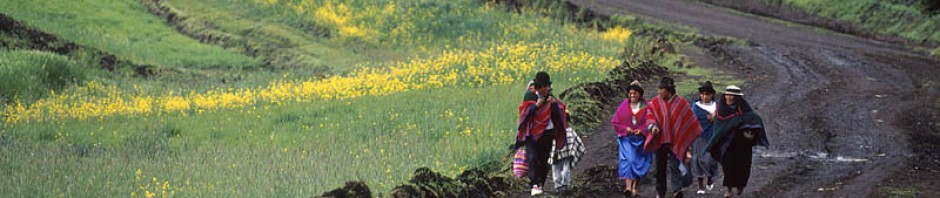
One of the cool things HCJB Global does is help communities gain access to clean water and sanitation. After communities request HCJB Global’s help, HCJB Global engineers design the water system and coordinate the project. The benefitting communities provide most of the labor of ditch digging.
When a community has clean water and sanitation, the community’s health improves dramatically. Many, many health problems just disappear.
A recent blog post by Eric and Renee Fogg, HCJB Global missionaries in Shell, Ecuador, provides a first-hand account of a clean water project. Complete with photos, the story is a great example of the kinds of projects which we will be helping to happen.
How to Hand Dig a Trench 18 km long
And, if you’d like more information, Mission Network News just published an excellent article on HCJB Global’s next step after the community has clean water:
If you read our first blog post, The Adventure Begins, you already know the last step in our “What Next?” search, our three-week visit to Ecuador this January. But what happened before that? How did we get to that decision?
Over and over, we took “the next reasonable step,” even when we couldn’t see farther than that step.
We were first introduced to this concept at a Finishers Forum in Seattle in May 2011. This was a missions conference (for mostly older people) sponsored by the Finishers Project.
(Another ministry of the Finishers Project is Finishers.org, a website which connects adults like us with Christian organizations which need their experience and skills. Finishers.org led to our first contact from HCJB Global.)
One of the workshop speakers shared that God rarely gives us a road map for our whole journey, but He will always show us the next reasonable step in the journey. And, when we take that step, He will show us the one after that.
Since then, we have often asked, “What’s the next reasonable step?” We pray, research, and discuss. Then we make the best decision we can, and trust God to redirect us if we’ve gotten off track. Although we often feel uncertain and overwhelmed, God has always been faithful.
In June 2011 Scott was researching five or six international organizations, chosen from the ten to fifteen which contacted us through Finishers.org. He checked web sites and read statements of faith, mission statements, and application forms. Through many emails, phone calls, and personal visits, we explored where God might be sending us.
We examined our desires: What did we want from an organization? Where did we want to serve? What spoke to our hearts?
We were open to God redirecting us, but we started with what best matched these desires. We asked God to speak to us through sermons, Bible reading, and conversations. Amazingly, we heard a lot of sermons on Abraham being sent to a country God would show him!
While we were narrowing down our options, HCJB Global invited us to attend Discovery, a 2½ day training for new applicants in July 2011. We would need to formally apply to be missionaries, but the mission understood that we were attending as part of our search. This seemed to be the next reasonable step, a chance for us to learn more and–more importantly–a chance for God to close the door before we went any further with HCJB Global. (If we had known how involved and time-consuming the application process was, we may not have gone, but our ignorance protected us.)
Discovery was very intense, with group sessions on all aspects of the organization. As a couple we were grilled by a theology committee and a financial committee, and our personality test results were discussed. We had individual psychological interviews. Questions which would never be asked in a secular interview were fired at us. We joked that HCJB Global knew more about us than our family and friends!
Despite the uncomfortable level of scrutiny, we felt no “checks” from God, no red flags about the organization’s goals and methods, and no discomfort with the quality and character of the missionaries. We kept searching for things which might be wrong, and found nothing.
We didn’t make our final decision until after our Ecuador visit six months later, but we knew after Discovery that HCJB Global was our leading option. Of the organizations on our list, HCJB Global alone had both a strong Latin America presence and complex accounting needs which would utilize Scott’s accounting experience. We continued in that direction, trusting God to correct us if we were wrong.
We still have much we don’t know: When will we go? Who has God prepared to support us and how do we find them? How will we get everything done? Where are we going to live next month (that’s another story)? Appropriately, the theme of recent sermons at our church has been God’s awesome power–nothing is impossible for Him.
Last weekend, God “closed a door” on some of our plans for getting our business affairs in order before we go. We are asking ourselves, “What does God want us to do?” and we are again looking for the next reasonable step, trusting God to guide us one step at a time.

Noli & Scott, ready to ride
Who drives 15 hours for a four-hour ride? A unicyclist!
Friday, April 27 we drove five hours north to Seattle, Washington and spent the night with friends. Up at 5:15 a.m. Saturday, we picked up a Seattle unicyclist, Noli Ergas, and drove 1.5 hours to Anacortes to catch the ferry to Lopez Island, one of the U.S. San Juan Islands between Washington state and Victoria, British Columbia.

The Tour de Lopez is a non-competitive cycling ride which swells the rural island’s population by almost 50%. With 900 bicyclists and only two unicyclists, Scott and Noli got a lot of attention. While they rode the 31 mile route around the island, Jody explored Lopez Village, sat on the beach, and enjoyed the unique feel of a small island.

Scott about Mile 20
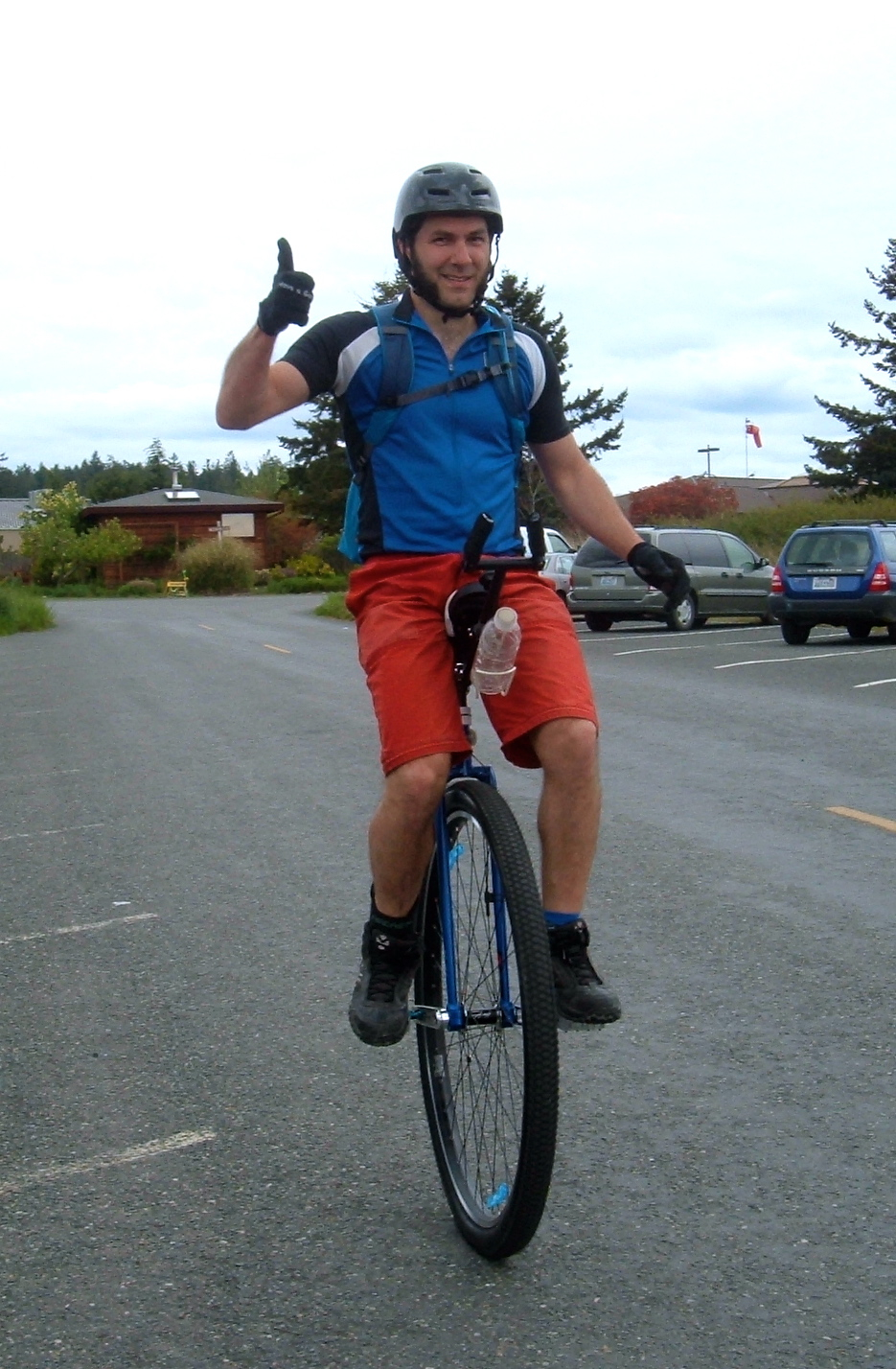
Noli finishing
The only way off Lopez Island is by ferry and catching the 1:30 p.m. ferry was essential to our plan of getting back to Oregon that night. So as soon as Scott and Noli finished riding, we headed to the ferry terminal and joined a mob of bicyclists for the 45 minute ferry ride back to Anacortes. Then it was 3.5 hours of heavy traffic before dropping off Noli in Seattle. Five hours later we were back home in Springfield, Oregon.
Was all that driving worth it? Yes! We’ve been very busy this year, with trips to Ecuador and Colorado and a hectic final tax season for Scott. We were moving from our home of almost 33 years into a small apartment, in anticipation of moving to Ecuador later this year. We hadn’t taken much time for fun. We enjoyed the brief visit to Lopez Island and the change of pace it brought. Despite the long drive, we came home refreshed.
Unicycling has been important to our family for more than 15 years. All seven of us ride, but it is Scott who enjoys it the most. And since getting his first 36” wheel in 2002, he has increasingly chosen longer road rides for his recreation.
We’ve been to fourteen consecutive North American conventions and three international events, including Ride the Lobster in Nova Scotia in 2008. We have met many wonderful people through unicycling. But because of our impending move to Ecuador, we’re not going to NAUCC 2012 this summer and we’re sad to miss it.
Unicycles are at the top of Scott’s packing list for Ecuador. He’s hoping he can take both his Telford mountain unicycle and his 36” Nimbus because he doesn’t want to choose between them. If we ship anything, it will be unicycles.

Scott’s Telford mountain unicycle
We believe unicycling will help us connect with our neighbors and community in Ecuador. The attraction of unicycling is universal. We have taught many people to unicycle here in Oregon and hope that we can in Ecuador, too. While Scott is looking forward to riding there, we both look forward to the wonderful and interesting people God will continue to bring into our lives through unicycling.
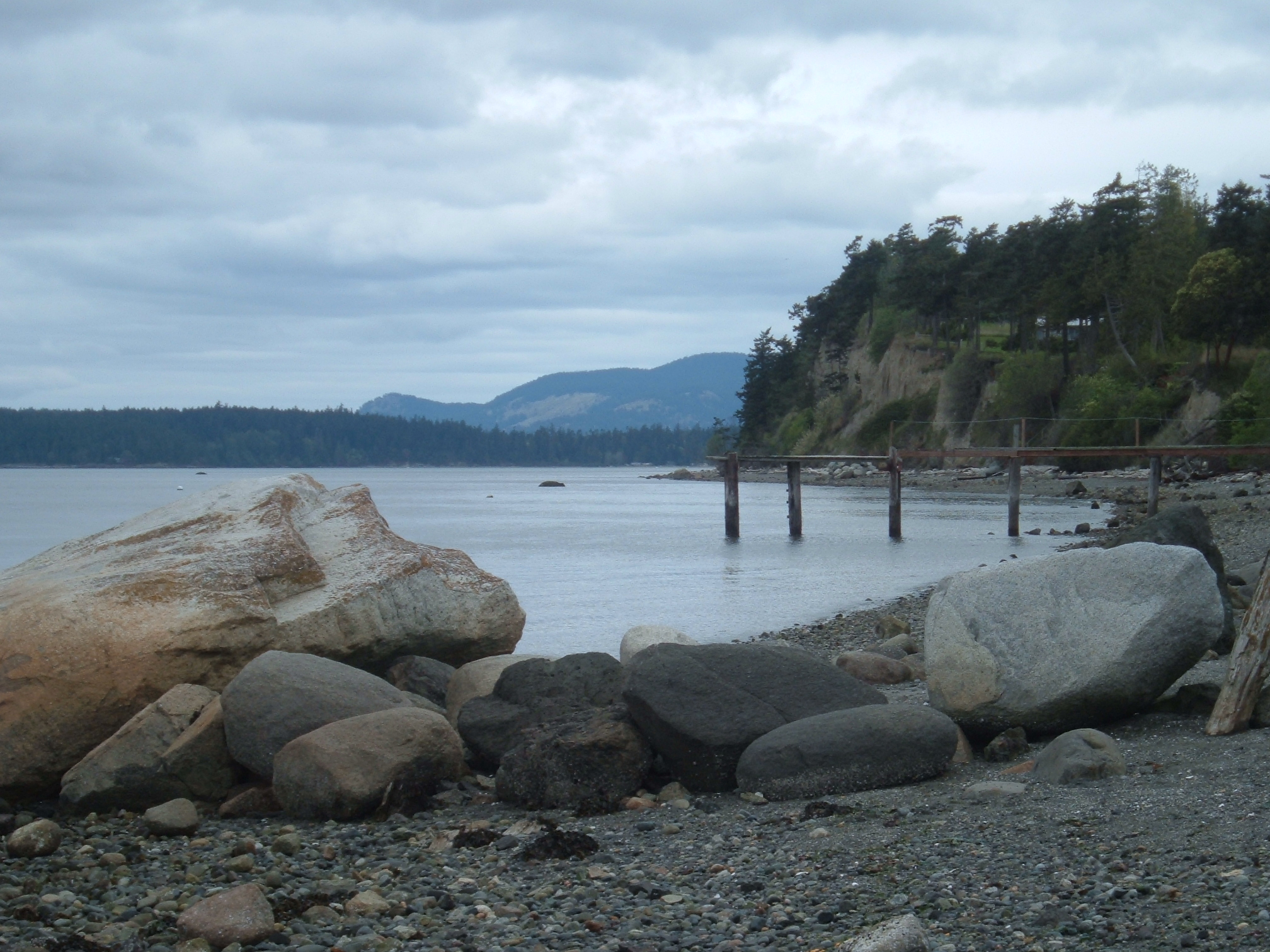
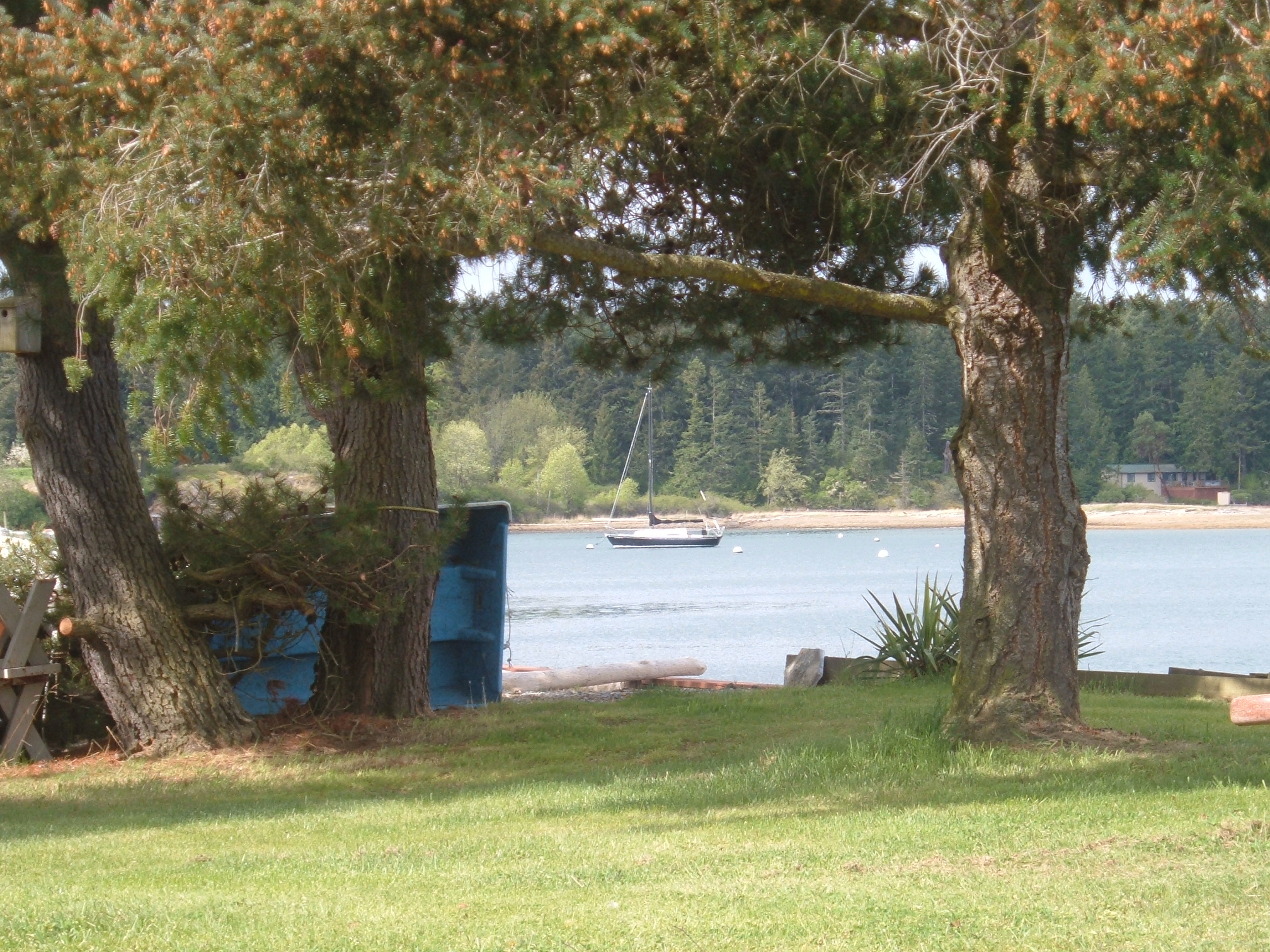
Here are some more views of Lopez Island:

Turn here!

I (Jody) was halfway through a long and stressful eye appointment at Oregon Health Sciences University in Portland. After a slow and inept exam by a resident, I was waiting for the glaucomologist.
It was then that I realized what I had been humming all day: Be Thou my vision, O Lord of my life. I had to smile to myself: how appropriate! And how gracious of God to remind me that He was with me.
Glaucoma
I was diagnosed with glaucoma in December 2005. Researchers don’t understand how glaucoma causes optic nerve damage, but elevated intraocular pressure is somehow involved. High pressure is a warning sign and lowering pressure slows the vision loss. When your eye exam includes the “puff of air” pressure check, you are being screened for glaucoma.
But some people, like me, have pressure which tests “normal” but is evidently too high for that person. Because glaucoma’s progress is slow and subtle and our brains fill in small gaps in our vision, these people usually don’t realize they have glaucoma until their vision loss is severe enough to be noticed.
Currently, I take three prescription eye drops seven times daily to lower my intraocular pressure. I will never regain my lost vision, but this regimen seems to be slowing further vision loss, and I’m very thankful.

My eye drops – $280 worth and they are generic!
The Glaucomologist
When my opthalmologist in Eugene heard that I was moving to Ecuador, he was concerned about my medical care there. He referred me to the leading glaucoma specialist in Oregon, asking his opinion on my having a “last resort” eye surgery before I left.
Thankfully, the specialist felt that my vision was stable enough to wait on that surgery. He did give me the name of a glaucomologist in Quito, an internationally-known doctor of whom even my eye doctor in Eugene had heard!
Hanging Up My Keys
At the end of the exam in Portland, I asked the glaucomologist, “I haven’t driven at night for four years or so. Do you think I should stop driving altogether?” He said, “Well, you’re still legal–you don’t have to stop. But if it were me, I’d stop. It isn’t worth the risk of hurting someone else.”
I struggled with this for about two weeks, thinking and praying. Then, about a month ago, I had two close calls within 15 minutes. First, I didn’t see a car pulling out of a parking space, and then I didn’t see a pedestrian crossing in front of me.
I knew it was time to stop: I couldn’t ask for clearer guidance from God than two close calls with no injuries. The adjustment has been difficult, with lots of emotions: fear, anger, frustration, jealousy. It’s a grieving process, much like when I was first diagnosed. God will get me through it.
What about the Future?
The big answer is that my future is in God’s hands. My glaucoma did not catch Him by surprise: it is part of His plan and He will use it for good.
I’m thankful that we had already decided to be carless in Ecuador, so I wasn’t going to be driving anyway. I’m also thankful that I can still do the clerical work I enjoy. I use a large monitor and need a good light for any papers I’m typing from, but I manage very well.
Glaucoma progresses very slowly and I hope it is many years before I can’t do clerical work. If and when that time comes, God will have other things I can do to share Jesus’ love wherever we are living.
And I probably will still find myself humming Be Thou My Vision at unexpected times!

Our daughter Hope has written a murder mystery to be performed Saturday, June 2, 2012, as a fundraiser for our HCJB Global ministry account! How cool is that?
I’m told it will be “an evening of fun, suspense, and delectable desserts.” For more information or to buy tickets on-line, visit the EventBrite page:
Jody was giving her personal testimony at morning chapel in HCJB Global’s Ministry Service Center in Colorado Springs, Colorado. A quiet, behind-the-scenes person, this was one of the last things she wanted to do.
Scott was nervously awaiting his turn to speak. He had been struggling for five days about what to say and how to say it. He finally had confidence in what was important to reveal, but how would it come out and could he keep from stumbling?
We were attending The Climb, eight days of training for new HCJB Global missionary appointees. We were one of five married couples, all just beginning to raise support. Sometimes called “friend raising” or “people raising,” appointees typically spend more than a year reaching 100% of their monthly support and the one-time expenses of going to “the field.”

All Five Climb Couples
On our first day we learned some of the challenges of our training. In addition to our chapel testimonies, we’d be preparing and presenting our ministry vision to real people in their homes. We’d ask them to donate to HCJB for our support! Both testimony and presentation were terrifying and unlikely for us. We enjoy being in the background, not in the forefront.
But 34 training sessions and many conversations and discussions later, we began to wrap our minds and our hearts around the support-raising process:
Our presentations went well, and we were able to use our new tools in ways that fit our personalities and values. It was a huge hurdle for us, but we did “The Ask.” We received valuable advice from our coach. Our chapel testimonies were well received and we both finished before the seven minute “STOP” sign was raised in the back of the chapel.
Heading home to Oregon, we realized that somehow, in just eight days, God had taken us from, “We’re going to do WHAT?” to, “With God’s help, we can do this!”
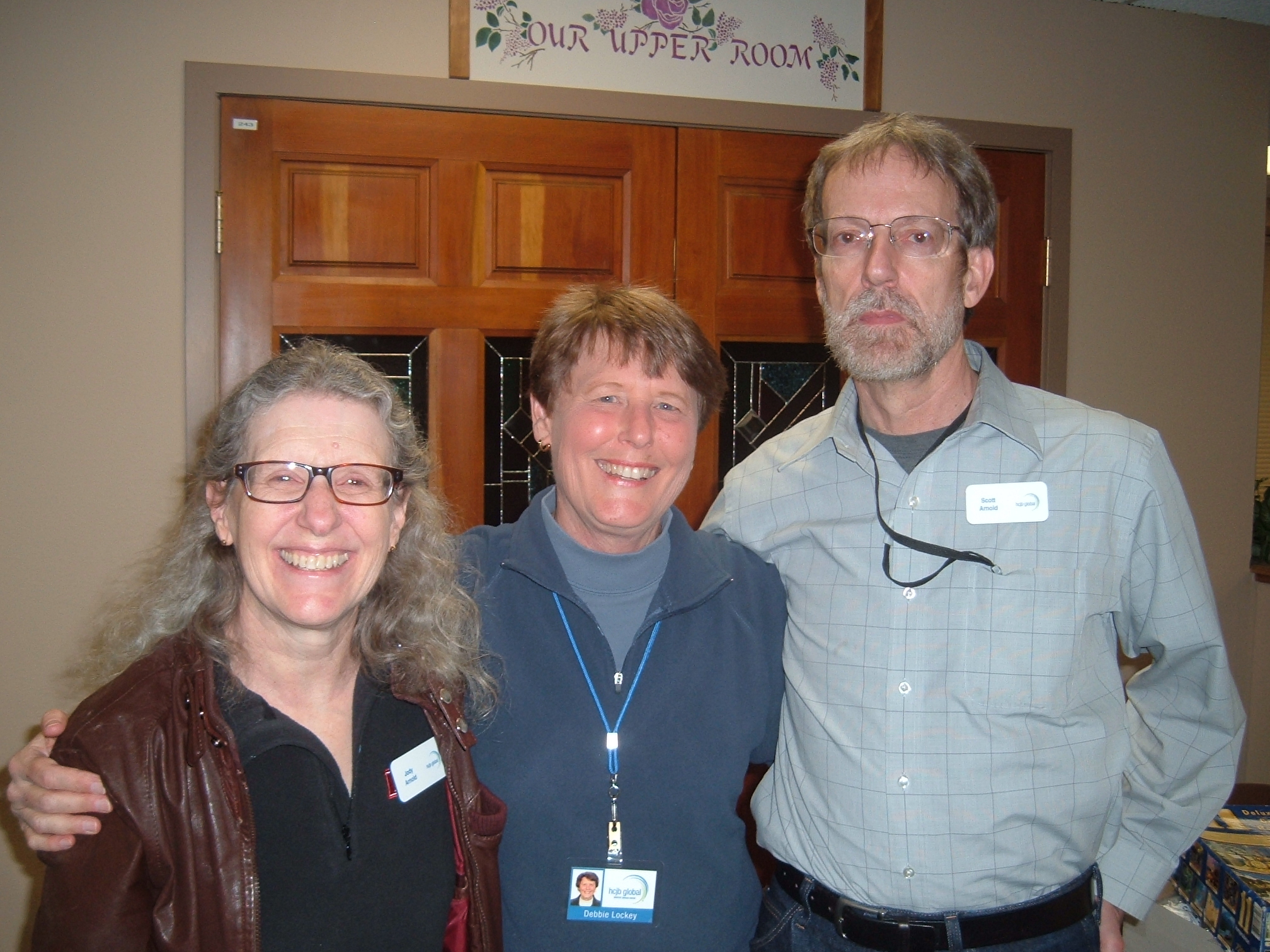
Jody, Scott, & our coach, Debbie Lockey
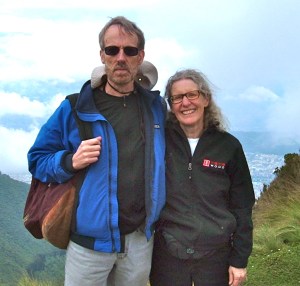
As our airliner descended into Quito’s narrow valley, the downtown buildings were startlingly close below our plane. At the landing the passengers all burst into applause. We thought it was relief at a safe landing, but Jody’s Ecuadorean seat mate explained that it was tradition to clap upon arriving in Ecuador.
We were arriving for a three-week working vacation with HCJB Global at their Latin America Region headquarters. After years of dreaming and months of searching, it was time for a visit, the last step in our “What Next?” process.
After 31 years as a CPA, Scott was retiring from public accounting. Our search was for a Christian missions organization which could use Scott’s accounting expertise. HCJB Global seemed like the right fit — was this where God was sending us?
Our three weeks flew by. We had lots of rain, and people teased that we brought it with us from Oregon. We had sun, too, and electrical storms. We visited the coast and boogie-boarded in a warm Pacific Ocean. We traveled east to the edge of the Amazon jungle. One of the few disappointments was never glimpsing even one of the three snow-capped volcanoes that rise to the east of Quito (and are visible on a clear day).
But most of our time was spent volunteering in north central Quito at the headquarters for HCJB Global’s media and healthcare ministries in Latin America. Quito is a city of approximately 2 million people in a high Andean valley. At 9,350 feet above sea level, it is the second highest capital in the world (surpassed only by La Paz, Bolivia at 12,087 feet). We were heartened that we didn’t suffer from altitude sickness and that we were noticeably better acclimatized by the end of our stay.
HCJB Global started in Quito 80 years ago as the world’s first missionary radio station (HCJB are the call letters of the original station). Now active in over 100 countries, it seeks to spread the good news of Jesus Christ through the creative use of media while also ministering to physical needs by providing health care and community development. We were impressed with HCJB Global’s strategy of partnering with other organizations and equipping locals so that their programs are self-supporting.
We were encouraged by the many missionaries we met, their dedication to serving the people of Latin America, and the welcome we received. We returned to Oregon, excited about what God is doing in Ecuador and through the worldwide ministry of HCJB Global. About a week later we purposed to make Quito our new home!
 Adventures in Middle Earth
